
Answers to Questions Received at the ifia JAPAN 2025 Exhibition
Introduction
My name is Murase from the Food Business Division.
Our company exhibited at "ifia JAPAN 2025 – The 30th International Food Ingredients & Additives Exhibition and Conference", held at Tokyo Big Sight from Wednesday, May 21 to Friday, May 23, 2025, following our participation last year.
During the exhibition, we had the valuable opportunity to engage directly with many visitors who showed strong interest in our technologies.
At our booth, we introduced our latest initiatives to these attendees. One of the main highlights was the launch of our new solution, “digzyme Custom Enzyme Lab”
(For more details, please refer to our press release:https://prtimes.jp/main/html/rd/p/000000018.000050097.html)
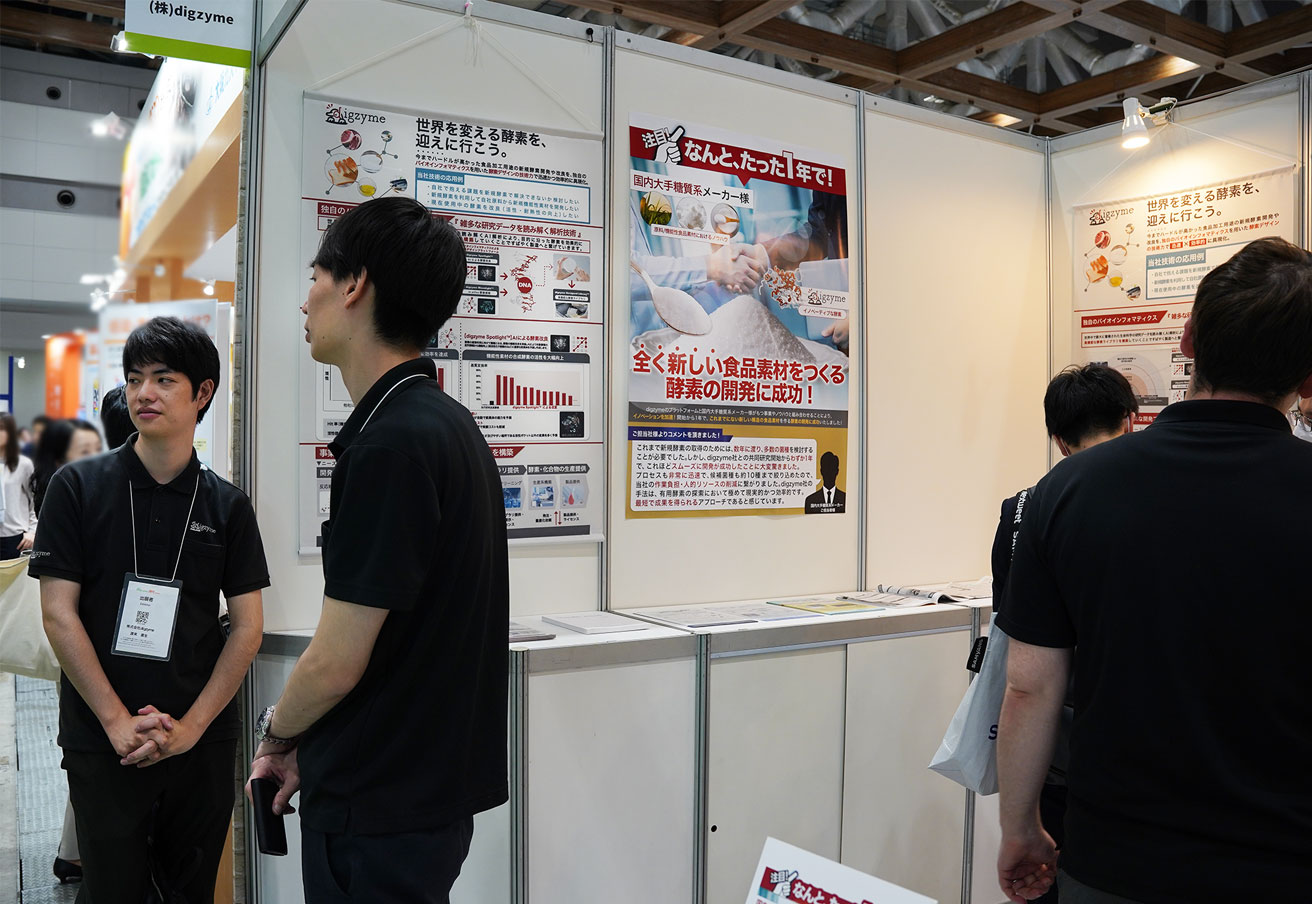
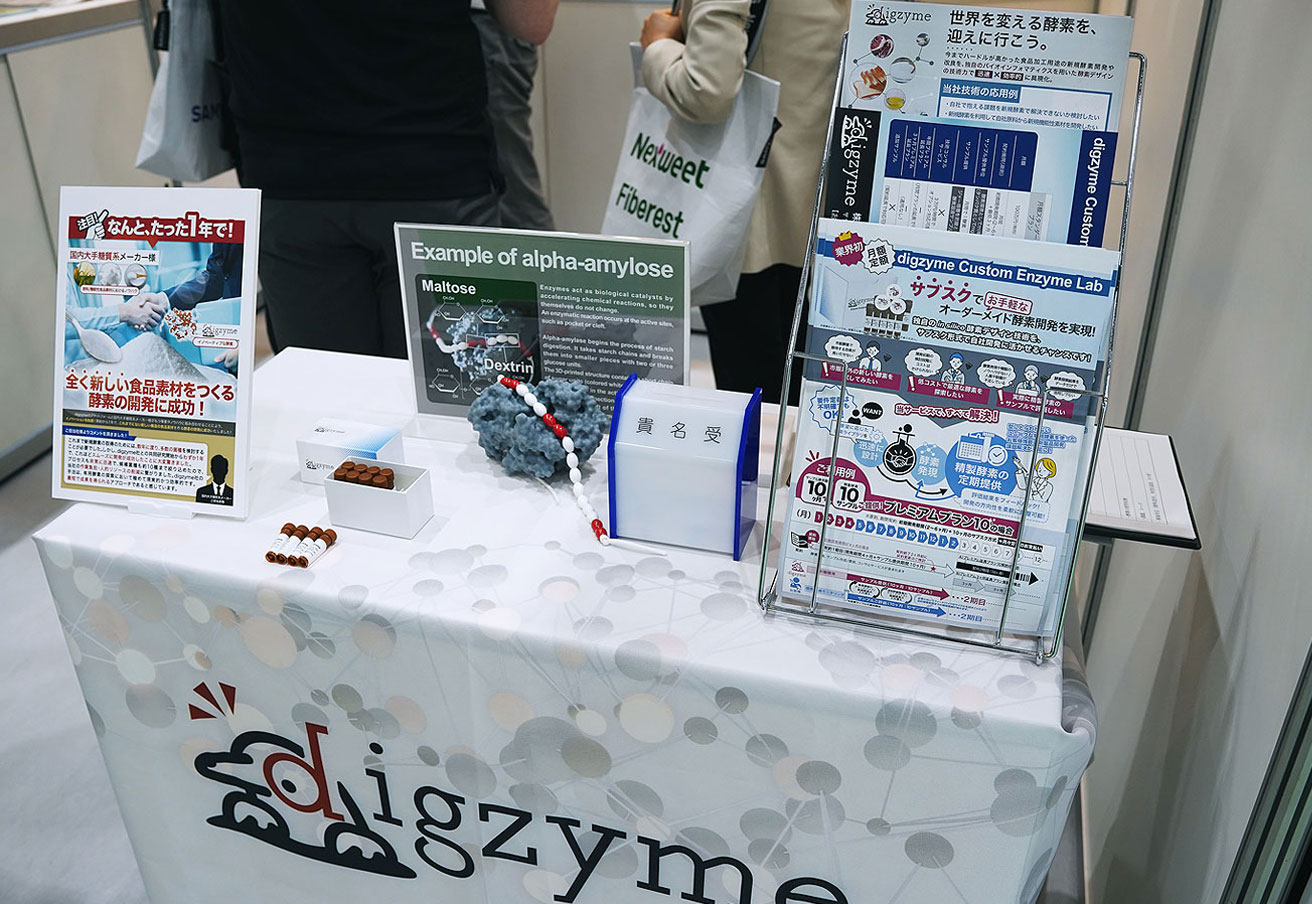
The launch received an overwhelmingly positive response, far exceeding our expectations. Our booth was filled with lively discussions throughout the exhibition, as we received numerous specific questions and inquiries from many visitors each day.
In this special edition of our tech blog, commemorating the launch of “digzyme Custom Enzyme Lab”, we’ve selected some of the most frequently asked questions from the exhibition and provided detailed answers in a Q&A format.
This post is not only for those interested in our new solution, but also for anyone curious about enzyme-based development who may be wondering where to start.
We hope you’ll find useful insights—please read on to the end!
Q: For what types of product development can “digzyme Custom Enzyme Lab” be applied?
A:“digzyme Custom Enzyme Lab” is a flexible solution that can be applied to a wide range of development themes—from specific goals such as improving the efficiency of existing enzyme-based manufacturing processes to broader, more exploratory themes like developing novel food ingredients using enzymes.
By repeatedly exchanging purified enzyme samples and receiving feedback from your in-house evaluations, the development direction can be adjusted flexibly at each stage.
Q: What kind of information is provided with the purified enzyme samples?
A:We perform preliminary testing to confirm enzyme activity and provide a profile including optimal temperature, optimal pH, thermal stability, and pH stability. These data are provided alongside the purified enzyme samples.
Verification in your specific application or evaluation system can be conducted by your team.
Q:What is the quantity of purified enzyme included in the sample?
A:The quantity depends on the development theme and is determined through consultation. As a general guideline, samples are typically provided in volumes of several milliliters of enzyme solution, equivalent to several milligrams of protein.
Q:How do you define or set the initial development timeline?
A:Following a prior evaluation of the requested development theme, we assess the feasibility and propose an initial development timeline.
In most cases, the initial phase—covering in silico enzyme design through to the first delivery of a purified enzyme sample—is completed within 2 to 6 months.
Q:Is non-GMO enzyme development an option?
A:Yes, it is possible. For more details, please refer to the “digzyme Express” introduction page:https://www.digzyme.com/cms/wp-content/uploads/digzyme_Express_ol.pdf
Q:Is “digzyme Custom Enzyme Lab” a solution exclusively for the food industry?
A:“digzyme Custom Enzyme Lab” is a versatile solution available for use not only in the food industry but also in other sectors, including the chemical industry.
Q:If a suitable enzyme is found among the provided purified enzyme samples, what happens next?
A:Enzymes developed via “digzyme Custom Enzyme Lab” can smoothly transition into manufacturing development. digzyme provides comprehensive support throughout the entire process, including manufacturing technology development and regulatory approvals, accompanying you until your project is fully commercialized.
Q:How is intellectual property handled for the developed enzyme library?
A:If you find a promising enzyme among those developed via “digzyme Custom Enzyme Lab” and decide to pursue its commercialization, we are prepared to accommodate your needs flexibly.
This concludes our responses regarding the services provided through “digzyme Custom Enzyme Lab”.
Please feel free to contact us anytime, as we remain flexible and ready to accommodate your specific needs during the actual development process.
Thank you very much for reading through this Q&A.
If you have any questions or require further clarification, please do not hesitate to reach out to us via the contact form below.
[▼ Contact Form]
https://www.digzyme.com/contact/
Exploration of Artificial Synthetic Pathways
Introduction
I am Isozaki from the Business Development Department. Our company conducts explorations of artificial synthetic routes from "raw materials" to "target products" using enzymatic reactions. By simply inputting the compound structure data of the "target products" and "raw materials", we can output potential synthetic route candidates for producing the target product from the starting compound. In this blog, I will introduce a specific example where we predict a route to synthesize 4-amino-cinnamic acid, a which is used in the production of high-strength polymers for high-strength polymers, from glucose and the enzymes involved in the reactions.
Materials Used for Synthetic Pathway Exploration
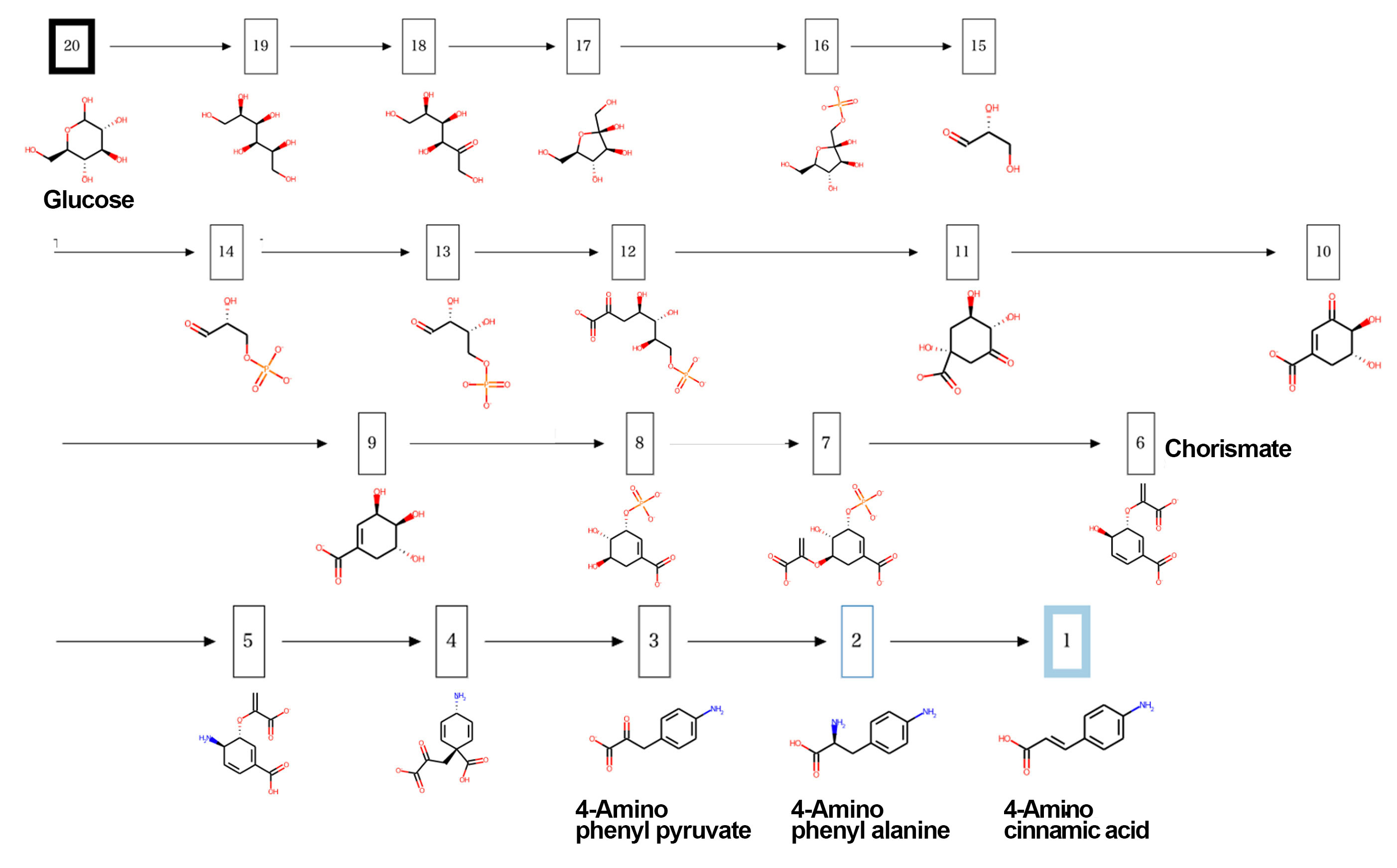
In Tateyama et al. (2016), 4-amino-cinnamic acid is used as a which is used in the production of high-strength polymers for producing high-strength polymers. The pathway used to synthesize this 4-amino-cinnamic acid is shown in Figure 1. Glucose serves as the raw material, and 4-amino-phenylalanine is produced using Escherichia coli engineered with Aminodeoxychorismate synthase (PapA) derived from Streptomyces venezuelae and Aminodeoxychorismate synthase (PapBC) derived from S. pristinaespiralis. Furthermore, this 4-amino-phenylalanine is used as a raw material, along with E. coli engineered with Phenylalanine ammonia-lyase (RgPAL) derived from Rhodotorula glutinis, to produce 4-amino-cinnamic acid.

Results
1. Biosynthetic Pathway Exploration
By inputting glucose as the Starting compound and 4-amino cinnamic acid as the product, an artificial synthesis pathway, as shown in Figure 1, was output. The output pathway was identical to the known synthesis pathway of chorismate from glucose, leading to the synthesis of 4-amino cinnamic acid via 4-amino phenyl alanine.
2. Similar Reaction Exploration
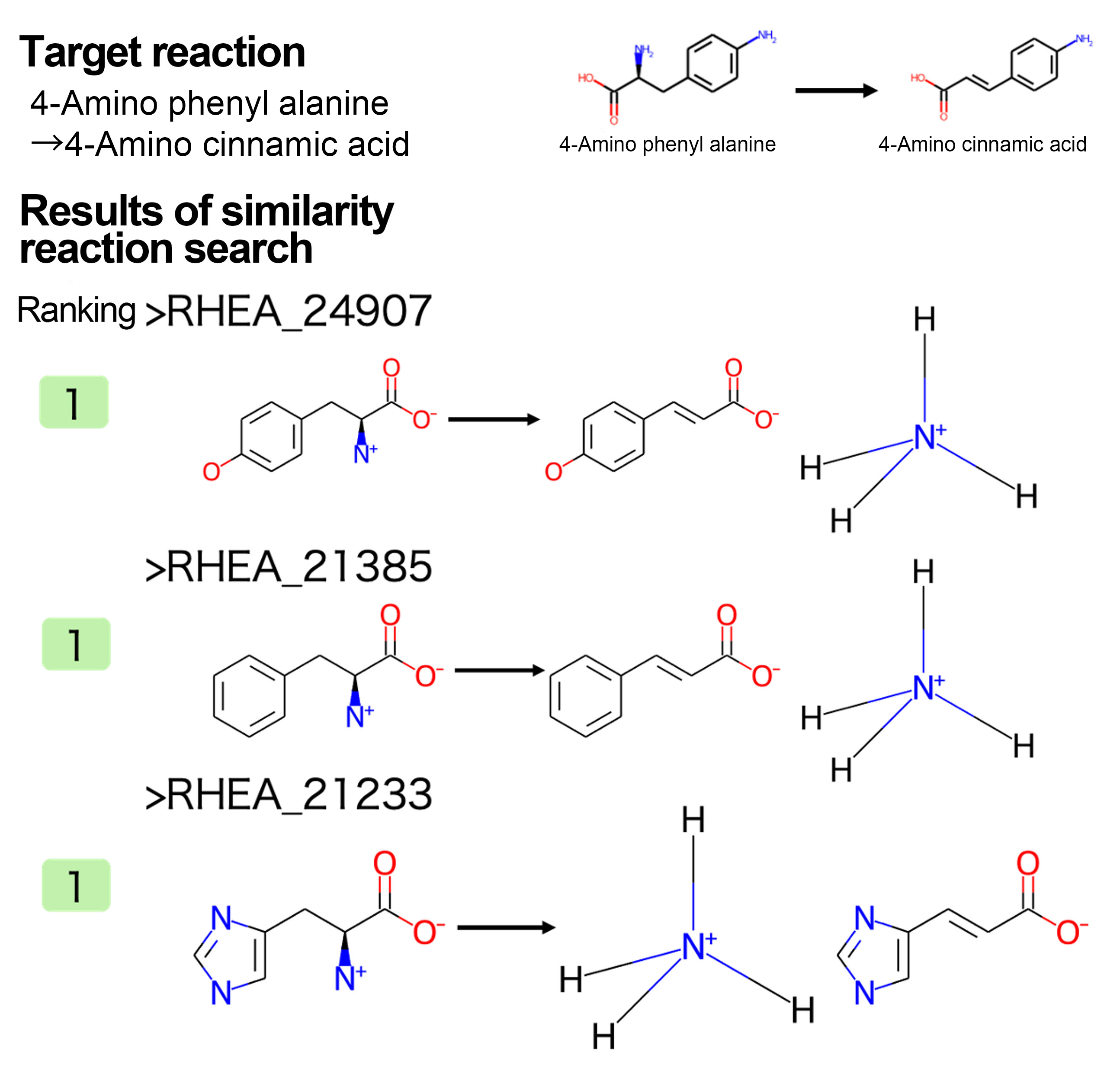
Among the artificial synthesis pathways identified in Result 1, the similar reaction from 4-amino phenyl alanine to 4-amino cinnamic acid was explored.
Through the exploration of similar reactions, a reaction that removes an amino group and generates a double bond was identified. Some of the similar reactions with a high degree of similarity to the target reaction and their rankings are shown in Figure 2. Similar reactions were extracted, including those that match the target reaction exactly.
3. Exploration of Corresponding Enzymes for Similar Reactions
In Result 2, similar reactions for the target reaction were extracted. The enzyme sequences responsible for these similar reactions were extracted by taxon. The filtered sequences were then compared with the enzymes used in the paper. Sequences were extracted at three levels: Rhodotorula genus, Eukaryota domain, and all taxa (Table 1). The extracted sequences included those that exhibited over 90% sequence homology with the sequences used in the paper.

Conclusion
In this blog, we demonstrated the exploration of artificial synthetic pathways. We explored an artificial route to synthesize the compound 4-amino cinnamic acid, which serves as a raw material for high-strength polymers, from glucose. We aimed to determine whether we could find enzymes that synthesize 4-amino cinnamic acid from 4-amino phenyl alanine using similar reaction enzyme exploration techniques. For the above reactions, we extracted sequences by taxon and presented the number of sequences for each. We successfully extracted multiple sequences that included several with high similarity to the enzymes used in the paper.
Acknowledgments
We utilized data from the following paper for this synthetic pathway exploration:
Tateyama et al. (2016). Ultrastrong, Transparent Polytruxillamides Derived from Microbial Photodimers. Macromolecules.